Monday, April 30, 2018


Friday, April 6, 2018
RBI regulated entities barred from dealing with cryptoexchanges
“It has been decided that, with immediate effect, entities regulated by RBI shall not deal with or provide services to any individual or business entities dealing with or settling VCs,” it said.
Going ahead you will not be able to buy cryptocurrency via banks or
e-wallets etc in India as the Reserve Bank of India (RBI) has
effectively banned such entities from "dealing with or providing
services to any individuals or business entities dealing with or
settling virtual currencies".
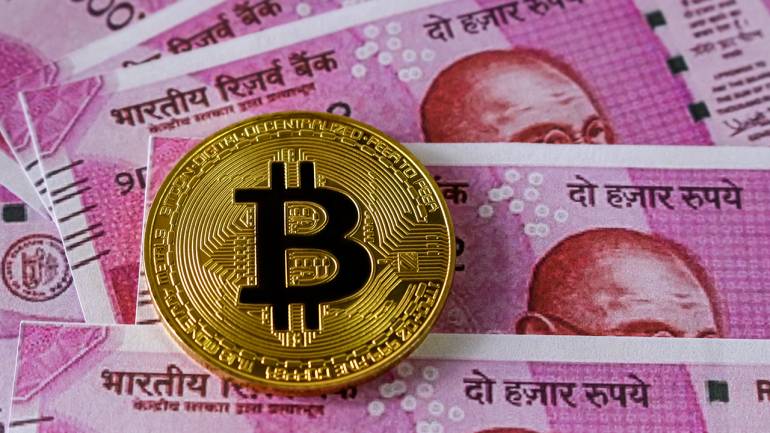 “Virtual currencies (VCs), also
variously referred to as cryptocurrencies and cryptoassets, raise
concerns of consumer protection, market integrity and money laundering,
among others,” the central bank said in a statement.
“Virtual currencies (VCs), also
variously referred to as cryptocurrencies and cryptoassets, raise
concerns of consumer protection, market integrity and money laundering,
among others,” the central bank said in a statement.
RBI asserted
that it has repeatedly cautioned users, holders and traders of virtual
currencies, including Bitcoins, regarding various risks associated in
dealing with such virtual currencies. “It has been decided that, with
immediate effect, entities regulated by RBI shall not deal with or
provide services to any individual or business entities dealing with or
settling VCs,” it said.
Regulated entities that provide such services “shall exit
the relationship within a specified time”, RBI said adding that it will
issue another circular for it.
In a move to regulate the cryptocurrency market in India, Finance
Minister Arun Jaitley clarified in his Budget speech it is not legal
tender and the government will discourage its use. However, he had
mentioned that the government will look at the utilisation of blockchain
technology.
There has been rising craze among investors to put in
their hard-earned money into the highly volatile cryptocurrency market
setting off alarm bells in the government.
Digital currency, led
by the Bitcoin, which has been the most popular among the plethora of
options, has gained immense popularity globally. However, the underlying
assets have been highly volatile with price movements swinging wildly
on news flow.
Globally, there has been a move to clamp down on
crypto trading, with countries such as South Korea banning anonymous
trade in such currency.
There have also been issues on safety of
investors’ accounts against hackers. There have been several instances
where accounts of investors have been hacked into by criminal elements
who have fled with investor wealth. Currently, there is no way to
retrieve such money lost to hackers.
Thursday, March 22, 2018
Cabinet clears Ayushman Bharat -National Health Protection Mission
This scheme will offer health cover of Rs 5 lakh per family per year to 10 crore families.
The cabinet on Wednesday approved the centrally-sponsored Ayushman Bharat-National Health Protection Mission (AB-NHPM), which will provide a health insurance cover of Rs 5 lakh per family per year.
The intended beneficiaries of the proposed scheme will be more than 10 crore poor and vulnerable families, based on the Socio Economic and Caste Census (SECC) database.
The existing Rashtriya Swasthya Bima Yojana (RSBY), which provided a health cover of Rs 30,000, and the Senior Citizen Health Insurance Scheme (SCHIS) will be subsumed into the new scheme.
Although the government has not specified an exact date for the introduction of the scheme, sources told Moneycontrol that a formal launch will be done on August 15.
The AB-NHPM was first announced by finance minister Arun Jaitley in his Union Budget speech this year.
A government statement said this cover will take care of almost all secondary care and most tertiary care procedures.
"To ensure that nobody is left out (especially women, children and elderly) there will be no cap on family size and age in the scheme. The benefit cover will also include pre and post-hospitalisation expenses. All pre-existing conditions will be covered from day one of the policy," the government said in the statement.
At present, most insurance policies exclude all pre-existing conditions of individuals in health insurance products.
The AB-NHPM will also have a defined transport allowance for every time a person is hospitalised, which will be paid to the beneficiary.
It is estimated that the government will need between Rs 20,000 crore and Rs 25,000 crore to implement the scheme.
AB-NHPM will be an entitlement-based scheme with entitlement decided on the basis of deprivation criteria in the SECC database.
The different categories in rural areas include families with only one room with kucha walls and kucha roofs, families having no adult member between age 16 to 59, and female-headed households with no adult male member between age 16 to 59, among others.
Also, families with disabled members and no able-bodied adult member, SC/ST households, and landless households deriving major part of their income from manual casual labour, will be entitled under the scheme.
For urban areas, 11 defined occupational categories are entitled under the scheme. The beneficiaries can avail benefits in both public and empanelled private facilities.
All public hospitals in the states implementing AB-NHPM will be deemed empanelled for the scheme. Hospitals belonging to Employee State Insurance Corporation (ESIC) may also be empanelled based on the bed occupancy ratio parameter.
As for private hospitals, they will be empanelled online based on defined criteria.
In terms of the mode of implementation, state governments will be allowed to expand AB-NHPM both horizontally and vertically. They can implement it through an insurance company or directly through a trust/society or a mixed model.
However, it is likely that most states will employ an insurance model wherein companies will be chosen through a process of tender.
To ensure that the funds reach state health agencies (SHAs) on time, the transfer of funds from the central government under AB-NHPMA to the SHAs will be done through an escrow account directly.
In partnership with NITI Aayog, an IT platform that will entail a paperless, cashless transaction will be made operational.
In the initial stages, outpatient expenses will not be covered under the scheme and only in-patient hospitalisation expenses will be covered.
Data showed that rural households primarily depended on their household income/savings (68 percent) and on borrowings (25 percent).
However, urban households relied much more on their income/saving (75 percent) for financing hospitalisation expenses, than on borrowings (18 percent).
Out of pocket (OOP) expenditure for healthcare in India is over 60 percent, which leads to nearly 6 million families slipping into poverty due to catastrophic health expenses. The AB-NHPM is expected to have an increased benefit cover for nearly 40 percent of the country's population.
Wednesday, March 21, 2018
India, China to discuss trade issues next week: Suresh Prabhu
India and China would hold bilateral discussions here next week on ways to further boost trade ties between the countries, Commerce Minister Suresh Prabhu said.
India and China would hold bilateral discussions here next week on ways to further boost trade ties between the countries, Commerce Minister Suresh Prabhu said.
He said a senior Chinese minister will be here next week for the bilateral meeting.
"We are very keen that how we will reduce the trade deficit with China. We will discuss that issue bilaterally," the commerce and industry minister told reporters here.
Trade deficit with China stood at USD 36.73 billion during April-October this fiscal. Increasing trade deficit with China can be attributed primarily to the fact that Chinese exports to India rely strongly on manufactured items to meet the demand of fast expanding sectors like telecom and power.Monday, March 12, 2018
Market Week Ahead: 10 key things that will keep traders busy
The market is likely to start the coming week on a positive note, tracking strong closing in US markets on Friday after better-than-expected jobs data but for the rest of the week, a bit of weakness amid consolidation is expected to continue, experts said.
The market continued its correction in the passing week despite recovery in global peers, shedding more than 2 percent and taking total losses to over 8 percent from its record high touched on January 29, 2018. Benchmark indices closed at fresh 2018 closing lows.
Continued weakness in the banking space after the Rs 12,700-crore PNB fraud case, and worries over trade war arising from the US announcement of import duties on steel and aluminium hit market sentiment.
Generally, when the market sharply moves either way, it becomes difficult to predict the top or bottom. Hence, in this falling market, people are finding it difficult to take long positions and are waiting for the bottom to be formed.
The market trend also indicated that traders as well as investors are using two strategies - "sell on rally" and "add exposure to quality stocks".
The current gradual correction from all-time high indicated the overall weakness in the market is not yet over due to ongoing asset quality issues in banking, the major driver of the economy, experts feel.
The market is likely to start the coming week on a positive note, tracking strong closing in US markets on Friday after better-than-expected jobs data but for the rest of the week, a bit of weakness amid consolidation is expected to continue, experts said, adding a major sell-off is unlikely unless there are any further detrimental developments in the banking fraud case or globally.
"The market breadth has remained weak throughout the week. Despite a recovery of almost 100 points on Thursday, a negative breadth clearly suggested prevailing scepticism in the market. Thus, selling pressure may continue at higher levels in the coming sessions.
As fresh shorts are not evident in data, any change of bias in the Nifty may be seen only if fresh long additions were observed or Call writers start unwinding their positions. At the same time, sudden depreciation in rupee also weighed on equities as it moved above 65 once again.
In the coming week, the market will closely watch the macro data (January IIP and February CPI inflation). The flow in secondary market could be impacted due to active primary market as three IPOs nearly worth Rs 10,000 crore will open for subscription.
"The macro data will give a sense of the economic recovery and trend in inflation, respectively. In this, inflation would be something that would be critical as its further hardening could trigger fears of rate hikes.
On the global front, he said President Trump’s rhetoric on trade protectionism could weigh on markets. On the other hand, any move by the Trump towards reconciliation with North Korea could be taken positively.
The recent fall in mid-cap stocks provides a good opportunity for investors to pick stocks. So he advises investors to select stocks with strong management quality, robust earnings growth and reasonable valuations.
Subscribe to:
Posts (Atom)

